Mock Server
Every time you publish a contract, Invokix starts a live mock server automatically. Your frontend and mobile engineers build against real endpoints with realistic data — before your backend team writes a single route.
How it works
When you publish, Invokix reads your OpenAPI contract and starts a Prism-compatible mock server. The server returns realistic fake data that matches your schema exactly — correct types, correct field names, correct enum values, correct formats like UUIDs and ISO dates.
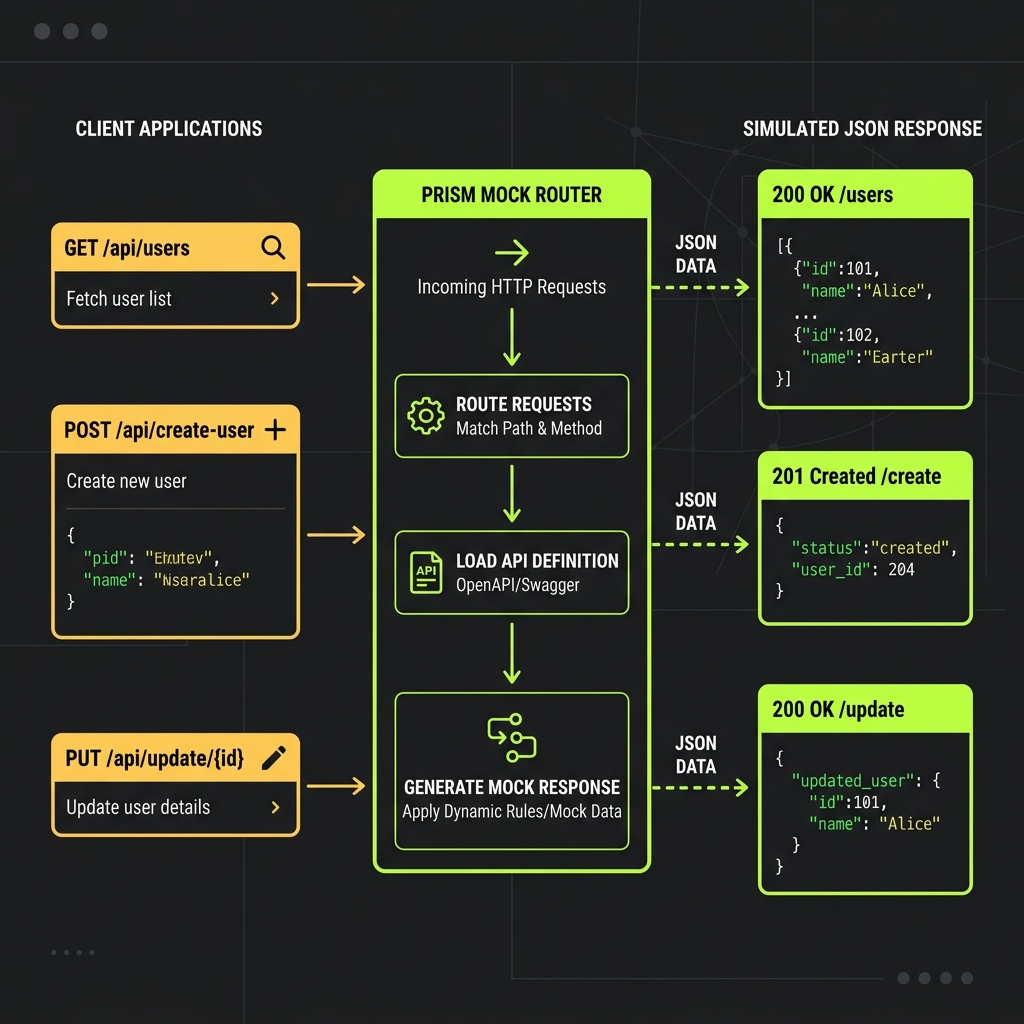
Your mock URL is always available in the Mock tab of your project. It updates automatically every time you publish a new version.
Your mock URL
https://invokix.com/mock/your-project-id

# Every endpoint in your contract is available immediately
GET  https://invokix.com/mock/your-project-id/orders
POST https://invokix.com/mock/your-project-id/orders
GET  https://invokix.com/mock/your-project-id/orders/550e8400-e29b-41d4-a716-446655440000
DEL  https://invokix.com/mock/your-project-id/orders/550e8400-e29b-41d4-a716-446655440000
Example responses
The mock server generates realistic data from your schema — not just empty objects or placeholder strings.
[
{
  "id": "550e8400-e29b-41d4-a716-446655440000",
  "price": 149.99,
  "status": "pending",
  "userId": "a87ff679-a2f3-471d-8305-cf3b83a70698",
  "createdAt": "2025-03-01T10:30:00Z",
  "lineItems": [
    {
      "id": "c4ca4238-a0b9-3382-8dcc-509a6f75849b",
      "productId": "prod_abc123",
      "quantity": 2,
      "price": 74.99
    }
  ]
}
]
Using the mock server during development
Point your app at the mock URL during development. When your real backend is ready, swap one environment variable.
const BASE_URL = process.env.NEXT_PUBLIC_API_URL ?? "https://invokix.com/mock/your-project-id"

export async function getOrders() {
const res = await fetch(BASE_URL + "/orders")
if (!res.ok) throw new Error("Failed to fetch orders")
return res.json()
}

export async function createOrder(body: CreateOrderBody) {
const res = await fetch(BASE_URL + "/orders", {
  method: "POST",
  headers: { "Content-Type": "application/json" },
  body: JSON.stringify(body),
})
if (!res.ok) throw new Error("Failed to create order")
return res.json()
}# During development — uses Invokix mock server
NEXT_PUBLIC_API_URL=https://invokix.com/mock/your-project-id# In production — uses your real backend
NEXT_PUBLIC_API_URL=https://api.yourcompany.comAuthentication is stripped
The mock server never enforces authentication. You do not need to send JWT tokens or API keys to the mock server — every request returns data regardless of auth headers. This is intentional so your frontend team can build without needing auth infrastructure set up first.
Mock server and contract versions
The mock server always reflects your latest published version. When you publish v1.2, the mock server restarts with the new contract within seconds. If your frontend is still on v1.1 types and the mock server is now returning v1.2 shapes — that is the breaking change gate working as intended.